PVC tarpaulin is widely used outdoors because it combines a strong polyester reinforcement with a waterproof PVC surface. However, long-term performance can vary significantly depending on climate. A material that performs well in a temperate warehouse yard may behave differently under intense sunlight, prolonged heat, or sub-zero winter conditions.
For this reason, buyers should not select outdoor tarpaulin by GSM or thickness alone. The PVC formulation, polyester reinforcement, coating quality, surface treatment, and expected temperature range all influence how well the material retains flexibility and strength over time. A good specification starts with the actual operating environment rather than a standard product label.
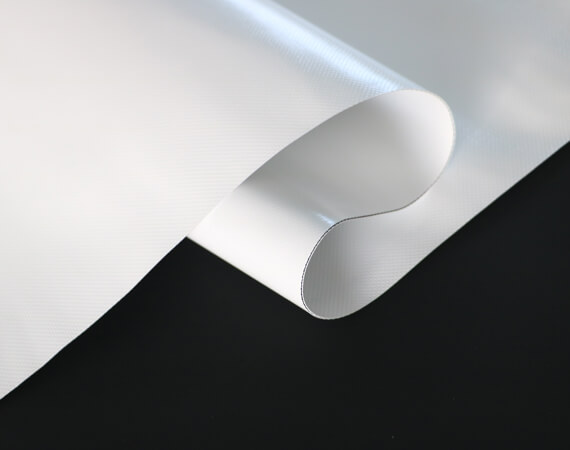
PVC is naturally waterproof and can be formulated for demanding outdoor applications, but environmental exposure gradually affects the material. Heat can increase surface temperature and accelerate aging. Low temperatures can reduce flexibility and increase the risk of cracking when the fabric is folded or tensioned. Strong ultraviolet radiation can gradually affect color and the condition of the PVC surface.
The polyester base fabric also matters because it carries much of the mechanical load. When tarpaulin is used as a truck cover, tent roof, awning, industrial cover, or membrane material, wind and repeated tension continue to act on the reinforcement while the PVC surface is exposed to weather.
The correct selection therefore depends on both climate resistance and structural performance. A tarpaulin should remain usable not only when it is lying flat, but also when it is folded, welded, stretched, installed, and repeatedly handled under the expected conditions.
Hot climates place continuous thermal stress on outdoor material, especially when dark-colored surfaces remain under direct sunlight for long periods. The actual surface temperature of a tarpaulin may be considerably higher than the surrounding air temperature, so material quality becomes particularly important for products used in exposed locations.
In these conditions, buyers should pay attention to the stability of the PVC formulation and the quality of coating adhesion. A well-produced coated fabric should maintain its surface integrity without becoming excessively soft or developing premature separation between the PVC layer and polyester reinforcement.
Color and surface treatment can also influence outdoor performance. Heli Textile uses UV-resistant formulations in several outdoor product ranges and notes that its tent tarpaulin is designed for markets such as the Middle East and South Asia, where strong sunlight, high temperatures, and humid climates are common.
For large tents, awnings, truck covers, and industrial outdoor protection, the more useful question is therefore not simply whether the material is “heat resistant.” Buyers should confirm whether the specific formulation has been developed for prolonged outdoor exposure and whether the fabric remains dimensionally stable under the expected tension.
Low temperature creates a different challenge. PVC becomes less flexible as temperature falls, and a material that bends easily at room temperature may become noticeably stiffer in winter. If the tarpaulin is folded, rolled, tensioned, or struck while cold, insufficient low-temperature flexibility can increase the risk of surface cracking.
This is why cold crack resistance is more meaningful than simply describing a product as “winter suitable.” Heli Textile states that its 550 GSM tarpaulin can be produced with cold crack resistance down to -40°C. This specification is particularly relevant for products that need to remain flexible in severe winter conditions.
However, buyers should not assume that every PVC tarpaulin automatically has the same low-temperature rating. Cold-resistant performance depends on the formulation used in the PVC layer. If a project will operate in freezing climates, the expected minimum temperature should be discussed before production rather than after the finished material has arrived.
Applications such as truck covers, temporary shelters, outdoor equipment covers, and storage tarps may also experience repeated folding in cold weather. In these cases, flexibility under actual use conditions can be just as important as tensile strength measured at normal laboratory temperature.
Ultraviolet radiation is one of the most important long-term concerns for outdoor tarpaulin. Continuous sunlight can contribute to color fading and gradual surface aging, particularly when material remains installed for months or years without protection.
UV resistance is therefore especially important for awnings, membrane structures, truck covers, event tents, and permanent or semi-permanent outdoor covers. UV stabilizers can be incorporated into the PVC formulation to slow degradation, while surface lacquering can provide additional protection and improve cleanability.
Heli Textile's heavy-duty PVC coated tarpaulin range includes UV-stabilized materials, and the company states that one heavy-duty construction can withstand a 2000-hour xenon arc lamp test. This kind of accelerated weathering information is more useful than a general “UV resistant” claim because it gives buyers a clearer basis for comparing outdoor specifications.
Even so, UV test performance should not be interpreted as an exact prediction of service life. Real exposure varies with climate, installation angle, color, cleaning, tension, pollution, and other operating conditions.
| Environment | Main Material Risk | What Buyers Should Prioritize |
|---|---|---|
| Hot and sunny climate | Accelerated surface aging and softening | Stable PVC formulation, coating adhesion, UV protection, and suitable surface finish |
| Cold or freezing climate | Loss of flexibility and cold cracking | Verified cold crack resistance and reliable flexibility during folding and handling |
| High-UV outdoor exposure | Color fading and gradual surface degradation | UV stabilizers, weather-resistant coating, and appropriate surface treatment |
| Hot and humid environment | Combined weather exposure and biological growth | UV resistance together with mildew-resistant formulation |
| Variable seasonal climate | Repeated temperature cycling | Balanced flexibility, coating adhesion, and weather resistance |
A heavier tarpaulin may provide greater mechanical strength, but additional GSM does not automatically create better resistance to heat, freezing, or ultraviolet radiation. Weather performance depends heavily on formulation and surface treatment.
For example, choosing a heavier standard fabric will not necessarily solve cold cracking if the PVC has not been formulated for low-temperature flexibility. Likewise, increasing thickness alone does not guarantee long-term UV stability.
This distinction is important in B2B sourcing because buyers often compare quotations using weight and price first. GSM is useful, but a proper specification should also consider the expected climate, service duration, mechanical loading, welding requirements, and any special properties such as flame retardancy or mildew resistance.
Environmental resistance should always be considered together with the way the finished product will be used. A stationary machinery cover in a cold warehouse yard experiences less movement than a truck tarp that is folded and tensioned every day. An awning may face constant sunlight, while a temporary tent may only be exposed outdoors for limited periods.
These differences affect the appropriate construction. Heli Textile manufactures coated and laminated PVC materials for applications including truck covers, tents, awnings, inflatable products, membrane structures, and industrial protection. Rather than starting with one standard specification, buyers can define the environment and finished-product requirements first.
If your application involves extreme sunlight, freezing temperatures, high humidity, or significant seasonal variation, you can contact Heli Textile with the expected operating conditions. Confirming these conditions before production makes it easier to select the correct coating formulation and fabric construction instead of relying only on GSM.
PVC tarpaulin can perform reliably in hot, cold, and high-UV environments, but different climates create different material stresses. Hot conditions place greater emphasis on formulation stability and coating integrity. Cold climates require sufficient low-temperature flexibility, while strong sunlight makes UV stabilization and surface protection increasingly important.
The most effective selection process combines climate requirements with the mechanical demands of the finished product. Weight, polyester reinforcement, coating construction, surface treatment, and environmental additives should be considered together. By defining the actual operating conditions before ordering, buyers can avoid both under-specifying material that ages prematurely and over-specifying a product that adds unnecessary cost.
Yes, but the material should have suitable cold crack resistance. Heli Textile offers certain formulations, including a 550 GSM tarpaulin rated for cold crack resistance down to -40°C.
UV stabilizers and suitable surface treatments help slow color fading and surface degradation caused by prolonged ultraviolet exposure.
Not necessarily. GSM mainly describes material weight. UV performance depends more directly on formulation, stabilizers, coating quality, and surface treatment.
Provide the expected temperature range, level of sun exposure, application, and how the finished material will be handled. This helps the supplier recommend a more appropriate construction.
 Tel/Whatsapp +8613567368410
  jack@tarpaulinspvc.com
 English