A protective fabric rarely gets attention when everything works as expected. It sits behind the scenes, covering equipment, shielding cargo, and protecting industrial assets from environments that constantly challenge its limits. However, the moment a material begins to crack, leak, or lose strength, the hidden importance of material engineering becomes immediately clear.
Industrial applications demand more than a simple barrier against the outside world. A reliable fabric must continue performing after repeated exposure to rain, sunlight, temperature changes, abrasion, and mechanical stress. This is why modern industries increasingly rely on engineered solutions such as PVC coated fabric material, where every layer is designed to contribute to strength, protection, and long-term durability.
The performance of PVC coated fabric is not created by coating alone. It comes from the relationship between the reinforcement fabric, PVC formulation, coating technology, and manufacturing control. When these elements work together, the material becomes a durable protective system capable of supporting demanding industrial applications.
For companies evaluating protective materials, selecting reliable PVC coated fabric suppliers is not simply a purchasing decision—it is a decision about long-term performance, maintenance requirements, and operational reliability. Understanding the engineering behind PVC coated fabric material helps businesses choose solutions that deliver consistent value in challenging environments.
Tarpaulinspvc provides PVC-based protection solutions designed for transportation, industrial, and commercial applications. By focusing on material performance and real-world application needs, businesses can identify suitable fabric solutions for different durability requirements.
The strength of PVC coated fabric material comes from its carefully engineered layered structure. Unlike ordinary fabrics that depend mainly on woven fibers, PVC coated fabric combines multiple functional layers to create a more complete protection system.
The foundation of the material is usually a reinforced fabric substrate that provides the necessary mechanical strength. Polyester fabrics are commonly selected because they offer excellent tensile strength, dimensional stability, and resistance to deformation. This reinforcement layer allows the material to withstand pulling forces, repeated handling, and continuous industrial use.
The outer PVC coating layers add additional protective functions. They help improve waterproof performance, enhance abrasion resistance, and create a barrier against external environmental factors. This layered structure allows the material to remain strong while maintaining enough flexibility for installation and daily operation.
The interaction between these layers is what makes PVC coated fabric different from basic protective fabrics. The reinforcement provides structural support, while the coating protects the structure from moisture, UV exposure, and surface damage.
| Material Layer | Main Function | Industrial Performance Advantage |
|---|---|---|
| Reinforced Fabric Base | Provides mechanical strength and stability | Improves resistance against stretching and tearing |
| PVC Coating Layer | Creates waterproof and protective surface | Helps prevent moisture penetration and surface damage |
| Surface Treatment Layer | Improves environmental resistance | Supports outdoor durability and easier maintenance |
| Composite Structure | Balances flexibility and strength | Allows use across different industrial applications |
Because of this engineered structure, PVC coated fabric material can provide consistent performance in applications where durability, weather resistance, and reliability are essential. The material is designed not only to withstand harsh conditions but also to maintain usability throughout long-term service.
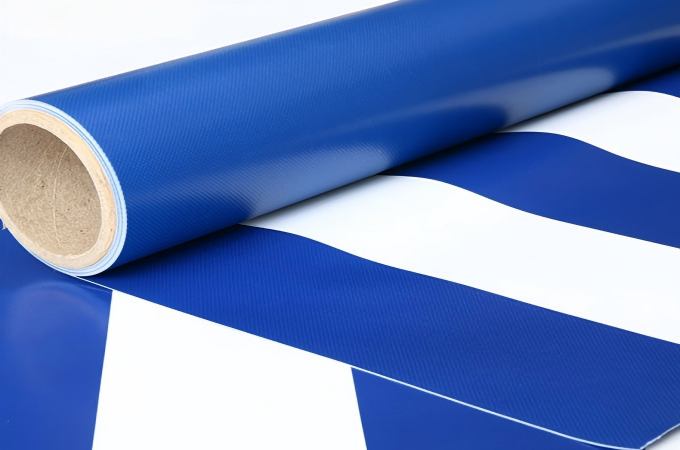
The quality of PVC coating technology directly influences the overall performance of PVC coated fabric. A well-designed coating process ensures that the protective PVC layer bonds effectively with the reinforcement fabric, creating a stable and durable material system.
One of the most important advantages of PVC coating is waterproof protection. The coating creates a continuous surface barrier that reduces water penetration and helps protect equipment, cargo, and industrial assets from moisture-related damage.
In addition to waterproofing, advanced PVC coating improves resistance against abrasion and environmental exposure. Industrial materials often encounter friction, dust, sunlight, and temperature variations. A durable coating helps maintain surface integrity and reduces premature aging caused by these factors.
Weather resistance is particularly important for outdoor applications. Materials used for transportation covers, storage protection, and industrial structures must continue performing after repeated exposure to changing weather conditions.
When comparing different PVC coated fabric suppliers, businesses should pay close attention to coating quality because it directly affects durability, waterproof capability, and long-term material performance.
The final quality of PVC coated fabric material depends on more than raw materials. Manufacturing precision, process control, and material selection all influence how the finished product performs in real industrial environments.
The first important factor is reinforcement fabric selection. The strength and stability of the base fabric determine how well the material handles mechanical stress. A properly selected substrate provides the foundation for durability and prevents excessive stretching or deformation during use.
Coating consistency is another critical factor. Uneven coating thickness or weak bonding between layers may reduce waterproof performance and shorten service life. Reliable production processes help ensure that PVC layers are evenly distributed and securely attached to the fabric base.
Temperature control during manufacturing also affects final material properties. Proper processing conditions help maintain coating stability, flexibility, and overall performance consistency.
Experienced PVC coated fabric suppliers usually focus on strict production control and quality evaluation to ensure that materials meet different industrial requirements. Consistent manufacturing quality helps businesses achieve predictable performance across various applications.
Industrial environments are often unpredictable. Protective materials may be exposed to heavy rain, strong sunlight, dust, chemical contact, abrasion, and continuous mechanical pressure. Under these conditions, ordinary fabrics may gradually lose strength and require frequent replacement.
PVC coated fabric material is engineered to handle these demanding situations by combining structural reinforcement with protective coating technology. The reinforced fabric layer provides mechanical stability, while the PVC coating creates a durable barrier against external factors.
This makes PVC coated fabric suitable for a wide range of industrial applications, including transportation covers, equipment protection, outdoor storage systems, and other environments where long-term durability is required.
Another advantage is its balance between strength and flexibility. Industrial materials need to be strong enough to withstand stress while remaining practical for installation, folding, movement, and maintenance. PVC coated fabric provides this balance, making it a reliable choice for applications that require repeated use.
For businesses searching for dependable materials, working with experienced PVC coated fabric suppliers can help ensure that the selected fabric matches specific environmental conditions and performance expectations.
Tarpaulinspvc offers PVC-based material solutions designed for industrial and commercial protection needs. Customers can explore suitable material options through the PVC tarpaulin solutions available for different application scenarios.
Before PVC coated fabric material is used in demanding industrial applications, performance testing plays an important role in verifying durability and reliability. Testing helps determine whether the material can maintain its expected performance under different operating conditions.
One important evaluation is tensile strength testing, which measures the material’s ability to resist pulling forces. Strong tensile performance helps reduce the risk of tearing when fabrics are stretched, installed, or exposed to mechanical stress.
Tear resistance testing is also important because industrial fabrics often encounter sharp edges, friction, and repeated handling. A material with good tear resistance can better withstand accidental damage during operation.
Waterproof testing evaluates how effectively the PVC coating prevents moisture penetration. This is especially important for outdoor applications where materials must protect equipment, cargo, or structures from rainfall and humidity.
Weather resistance testing examines how materials perform under prolonged exposure to environmental conditions such as sunlight and temperature changes. These evaluations help determine whether PVC coated fabric can maintain durability during long-term outdoor use.
| Performance Test | Purpose | Why It Matters |
|---|---|---|
| Tensile Strength Test | Measures resistance against pulling forces | Helps evaluate structural durability |
| Tear Resistance Test | Evaluates resistance to fabric damage | Supports reliability during handling and use |
| Waterproof Performance Test | Checks resistance to water penetration | Ensures protection in wet environments |
| Weather Resistance Test | Evaluates outdoor aging performance | Helps predict long-term application reliability |
For companies comparing different pvc coated fabric suppliers, understanding testing standards and quality evaluation methods can help identify materials that provide more consistent performance.
Long-term industrial applications require materials that can deliver stable performance over extended periods. Frequent replacement of protective fabrics can increase operational costs, create downtime, and affect overall efficiency.
Durable PVC coated fabric material helps solve these challenges by providing reliable protection against common industrial threats. Its waterproof surface reduces moisture-related problems, while its reinforced structure improves resistance against mechanical damage.
In transportation applications, PVC coated fabric can be used for truck covers and protective systems that require resistance against weather exposure and repeated handling. In industrial environments, it can support equipment protection and outdoor covering applications where durability is essential.
The long-term value of PVC coated fabric is not only determined by its initial performance but also by how effectively it reduces maintenance requirements throughout its service life. A well-selected material can help businesses improve operational stability and reduce unnecessary replacement costs.
When selecting materials for demanding applications, companies should consider environmental conditions, expected service duration, and performance requirements. Businesses with specific project needs can contact Tarpaulinspvc’s team for application guidance and discuss suitable PVC-based protection solutions.
The durability of industrial protection materials depends on careful engineering rather than a single material feature. From reinforcement fabrics and PVC coating technology to manufacturing control and performance testing, every stage influences how well a material performs in real-world conditions.
PVC coated fabric material provides a reliable solution for industries requiring waterproof protection, mechanical strength, and long-term environmental resistance. Its layered structure and advanced coating technology allow it to support demanding applications where ordinary fabrics may not provide sufficient durability.
For businesses evaluating protective material options, choosing experienced PVC coated fabric suppliers and understanding material engineering principles can lead to better performance, lower maintenance requirements, and improved long-term value. With the right material selection, PVC coated fabric continues to serve as an important solution for industrial protection needs.
1. What is PVC coated fabric material?
PVC coated fabric material is a reinforced fabric combined with PVC coating layers to provide waterproofing, durability, and resistance against environmental conditions.
2. What are the main advantages of PVC coated fabric?
PVC coated fabric offers strong durability, waterproof performance, weather resistance, abrasion resistance, and flexibility for different industrial applications.
3. Why is the layered structure important for PVC coated fabric?
The layered structure combines reinforcement strength with protective coating performance, allowing the material to withstand demanding industrial environments.
4. How can businesses choose reliable PVC coated fabric suppliers?
Businesses should evaluate supplier experience, material consistency, quality control processes, and the suitability of products for specific applications.
5. What tests are used to evaluate PVC coated fabric durability?
Common evaluations include tensile strength testing, tear resistance testing, waterproof testing, and weather resistance testing.
6. Where is PVC coated fabric material commonly used?
PVC coated fabric material is widely used in transportation covers, industrial protection systems, outdoor structures, equipment covers, and other demanding applications.
 Tel/Whatsapp +8613567368410
  jack@tarpaulinspvc.com
 English