PVC tarpaulin combines a polyester reinforcement layer with waterproof PVC surfaces, but not every tarpaulin is built in the same way. Two common constructions are PVC coated tarpaulin and PVC laminated tarpaulin, and the difference affects strength, handling, fabrication, durability, and cost.
For buyers and product manufacturers, the key question is which construction provides the right balance for the finished product.
A PVC coated tarpaulin is produced by applying PVC coating material directly to a woven polyester base fabric. The polyester scrim provides structural strength, while the PVC layer creates the waterproof surface and contributes to abrasion resistance, weather protection, and weldability. Because the coating is bonded closely to the textile reinforcement, this construction is commonly selected when the finished product must withstand repeated mechanical stress or demanding outdoor use.
PVC laminated tarpaulin uses a different process. PVC film is laminated to a polyester textile layer rather than being built up through the same coating method. Heli Textile notes that laminated tarpaulin is generally lighter and more economical than coated material. It still provides effective waterproof protection, but its structure is often better suited to applications where low weight, flexibility, and cost efficiency matter more than maximum mechanical durability.
| Selection Factor | PVC Coated Tarpaulin | PVC Laminated Tarpaulin |
|---|---|---|
| Construction | PVC coating applied to woven polyester fabric | PVC film laminated to polyester textile |
| Mechanical strength | Generally preferred for higher tear and load conditions | Suitable for lighter-duty applications |
| Weight and handling | Often heavier in comparable heavy-duty specifications | Usually lighter and easier to handle |
| Cost position | Chosen when performance justifies higher material cost | Often more economical for moderate-duty projects |
| Typical use direction | Truck covers, membrane structures, industrial covers, demanding tents | Small tents, ground sheets, light covers, smaller ventilation ducts |
The table is only a starting point. Fabric construction, weight, surface treatment, and production quality also affect real performance.
Coated construction is usually the stronger candidate when the tarpaulin will experience repeated tension, abrasion, wind loading, frequent handling, or long-term outdoor exposure. This is why it is widely associated with truck covers, side curtains, large tents, tensile membrane structures, and industrial covers.
For these applications, buyers should look beyond total GSM. The reinforcement fabric, tear resistance, tensile performance, coating adhesion, and seam behavior all influence whether the material can cope with actual service conditions. A heavier material is not automatically better if the internal textile structure or coating consistency is weak.
Coated material also makes sense when the finished product depends heavily on welding. PVC fabrics are commonly joined by high-frequency or hot-air welding, so converters should evaluate seam performance together with the base material rather than treating weldability as a secondary detail.
Laminated tarpaulin is often more practical when a project does not require the same level of mechanical strength. Its lower weight can make cutting, handling, transportation, and installation easier, especially for temporary products or covers that are moved frequently.
Cost is another reason buyers choose laminated construction. For small tents, tent flooring, light-duty covers, and smaller flexible ducts, specifying a heavy coated fabric may add expense without producing a meaningful benefit. The better purchasing decision is to match the material to the actual load and exposure rather than automatically choosing the most robust specification.
Laminated material is not simply an inferior substitute. If waterproofing, flexibility, manageable weight, and competitive cost are the priorities, it may be the more efficient solution.
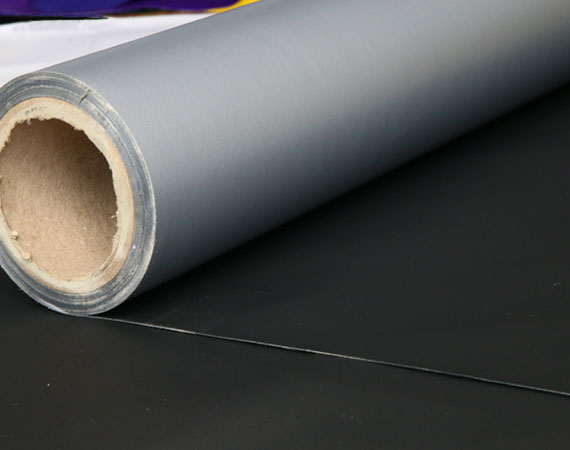
The finished-use environment should have more influence on the choice than the coated-versus-laminated label alone. A truck cover exposed to highway airflow and repeated fastening experiences very different stress from a temporary ground sheet.
Climate also matters. Continuous UV exposure, low temperatures, humidity, or contact with oils and chemicals can change long-term material behavior. PVC formulations can be adjusted for properties such as flame retardancy, mildew resistance, anti-static performance, or improved cold resistance, so the construction should be paired with the correct formulation.
Heli Textile offers PVC tarpaulin materials for a wide range of applications, with PVC vinyl fabric weights from 300 to 1500 GSM according to its current product information. For buyers, the value of that range lies in selecting a specification around the actual product rather than forcing one standard material into every application.
GSM is useful because it describes material mass per square meter, but it does not fully describe strength or durability. Two tarpaulins at a similar nominal weight can use different polyester yarns, thread densities, PVC content, or surface treatments. Those differences can change tear behavior, tensile strength, dimensional stability, and fabrication performance.
For a B2B purchase, review the specification as a system. Check whether the polyester base suits the expected load, whether the PVC construction matches the exposure, and whether the fabric can be processed reliably. Any required flame-retardant or environmental performance should be confirmed before production.
A practical rule is to begin with the consequences of material failure. When high strength, repeated mechanical loading, long-term exposure, or demanding fabrication is central to the product, coated construction usually deserves priority. When the application is lighter, temporary, easier to replace, or especially sensitive to material cost and handling weight, laminated construction may be more rational.
Sample testing is valuable when the material will be converted into a finished product. Folding, welding, tensioning, and exposure tests can reveal differences that are not obvious from a quotation sheet. Approving a representative sample before bulk production also helps align expectations.
As a manufacturer of both coated and laminated PVC materials, Heli Textile can review the intended application before a specification is finalized. Buyers planning a new product or replacing an existing fabric can contact Heli Textile to discuss the most suitable construction and specification.
PVC coated and PVC laminated tarpaulin share the same basic purpose of combining polyester reinforcement with a waterproof PVC surface, but their construction leads them toward different applications. Coated tarpaulin is generally the better fit where strength, coating adhesion, repeated handling, and durability are important. Laminated tarpaulin is often more suitable when lower weight, flexibility, and cost efficiency are the main priorities.
The best choice is therefore application-specific. Evaluate how the finished product will be loaded, handled, fabricated, stored, and exposed before comparing prices. A well-matched construction can improve performance while avoiding the unnecessary cost of over-specifying the material.
In general, coated construction is preferred for higher-strength and heavy-duty applications because it typically provides stronger coating adhesion and uses a more robust woven polyester base.
Yes. PVC laminated tarpaulin is designed to provide waterproof protection and is commonly used for tents, ground sheets, covers, and other lighter-duty applications.
PVC coated tarpaulin is usually the better choice because truck covers face repeated tension, abrasion, weather exposure, and handling during transport.
No. GSM is only one specification. Polyester construction, tear strength, tensile strength, coating adhesion, surface treatment, and the intended application should also be considered.
 Tel/Whatsapp +8613567368410
  jack@tarpaulinspvc.com
 English