In the rapidly evolving world of sustainable aquaculture, Biofloc Technology (BFT) has emerged as a revolutionary method to increase density and improve water quality. As farmers seek to maximize their yields, the infrastructure supporting these systems has come under close scrutiny. Among the various components, the tank lining is arguably the most critical. For professionals looking for reliability, PVC coated tarpaulin for biofloc applications stands out as the superior choice, balancing high-performance mechanics with essential biological safety.
PVC coated tarpaulin for biofloc systems is an advanced industrial fabric engineered by bonding high-strength polyester mesh with layers of flexible Polyvinyl Chloride. This construction creates a non-porous, waterproof, and airtight barrier essential for holding large volumes of water and suspended solids.
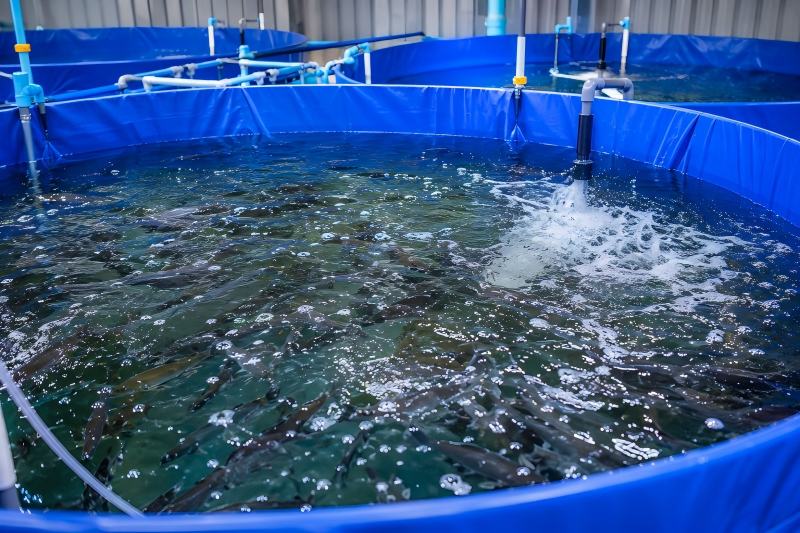
In Biofloc Aquaculture, the goal is to maintain a stable ecosystem where beneficial microorganisms convert waste into protein-rich feed. To succeed, the tank must be completely leak-proof and chemically inert. Because the environment involves constant aeration and the accumulation of organic matter, the liner acts as the "first line of defense." By utilizing premium PVC tarpaulin, farmers ensure that the tank wall does not degrade under the pressure of the water or the chemical makeup of the biofloc community, thereby protecting both the water quality and the health of the aquatic life inside.
The transition to high-density farming requires materials that can handle the rigorous demands of 24/7 operation. The advantages of using specialized PVC coated tarpaulin for biofloc are multifaceted:
Exceptional Durability and Tear Resistance: The high-strength polyester base provides the structural backbone, ensuring that even under thousands of liters of water pressure, the tank maintains its integrity.
Superior Leak Prevention: The coating process eliminates tiny pores found in standard woven fabrics, providing a 100% waterproof seal that is critical for biofloc systems that rely on water conservation and stability.
Chemical and Biological Inertness: High-quality PVC is resistant to the organic acids and ammonia commonly found in biofloc environments. It does not leach harmful substances into the water, ensuring the safety of fish and shrimp.
Ease of Maintenance: The smooth surface of the PVC prevents algae and bio-film from anchoring deeply into the fabric, making regular cleaning fast and efficient.
When comparing liners, the difference in performance often dictates the profitability of the harvest. Below is a comparison of common materials used in aquaculture:
| Material Type | Durability | Waterproofing | Maintenance Difficulty | Overall Suitability |
|---|---|---|---|---|
| PVC Coated Tarpaulin | Excellent | High | Low | Best for BFT |
| Standard PE Tarpaulin | Moderate | Moderate | Moderate | Short-term only |
| Concrete/Cement | Permanent | Low (needs sealant) | High | High cost |
| Earthen Ponds | N/A | Very Low | Very High | Risk of disease |
Unlike PE (polyethylene) sheets, which often crack under prolonged UV exposure or high-pressure friction, PVC coated tarpaulin for biofloc retains its flexibility and physical properties over many seasons. Furthermore, compared to concrete, PVC provides a sanitary, smooth surface that is far easier to sanitize between stocking cycles.
Biofloc technology requires a highly controlled environment. The performance of the system is directly linked to the physical state of the tank liner.
The primary way PVC coated tarpaulin for biofloc enhances performance is through stability. Because the material is highly resistant to temperature fluctuations and chemical degradation, the bio-community within the tank remains undisturbed. In systems where air diffusers are used to keep the "flocs" suspended, the PVC surface provides a robust lining that withstands the constant bubbling and movement of water without thinning or suffering from friction-based abrasion. Additionally, the ability to weld this material into any shape allows farmers to optimize the flow dynamics of their tanks, minimizing "dead zones" where sludge might otherwise accumulate and turn anaerobic.
At Haining Heli Textile Co. Ltd., we understand that in aquaculture, quality is synonymous with survival. Since our inception in 2009, we have refined the art of producing high-performance textiles at our 50,000-square-meter facility in Haining, China.
Our commitment to the aquaculture industry is built on technical precision. We operate specialized production lines for knife-coated fabrics and advanced high-frequency welding equipment, which allows us to provide customized tank liners precisely to your design specifications. We know that in biofloc farming, the details matter; that is why our PVC fabric rolls can reach a width of up to 5.1 meters, reducing the number of seams and minimizing potential leakage points in your tanks.
We also prioritize the safety of your aquatic ecosystem. By controlling our raw materials and coating processes, we provide solutions that are durable enough for long-term industrial use while maintaining the cleanliness required for sensitive fish and shrimp habitats. Whether you are a small-scale innovator or managing a large-scale commercial fishery, our team is ready to support your infrastructure needs.
The success of a biofloc project depends on the harmony between biology and engineering. Choosing the right liner is not merely an operational cost; it is a critical investment in the longevity and safety of your aquatic life. PVC coated tarpaulin for biofloc provides the strength, impermeability, and ease of maintenance that modern aquaculture demands. By selecting premium materials from experienced manufacturers like Haining Heli Textile, you create a foundation for consistent, high-density yields. Ready to upgrade your aquaculture infrastructure? Contact our expert team today to discuss your project requirements and receive a professional consultation.
1. Why is PVC better for biofloc than traditional PE tarpaulin?
PVC coated fabric is significantly more durable, resistant to UV and chemical degradation, and provides a superior airtight/watertight seal, making it safer for long-term aquaculture use.
2. Is this material safe for fish and shrimp?
Yes. High-quality PVC coated tarpaulin designed for aquaculture is chemically stable and does not leach harmful phthalates or toxins into the water, ensuring a healthy environment for aquatic life.
3. Can I get custom sizes for my specific tank design?
Yes. With our advanced high-frequency welding machines, we can fabricate tank liners in almost any shape or size to match your specific biofloc tank layout.
4. How long does the PVC liner typically last?
With proper maintenance and cleaning, our industrial-grade PVC tarpaulin is designed to withstand multiple years of continuous use, significantly outperforming lighter, single-season agricultural films.
 Tel/Whatsapp +8613567368410
  jack@tarpaulinspvc.com
 English